

Laser Tattoo Removal
with the Discovery PICO Series
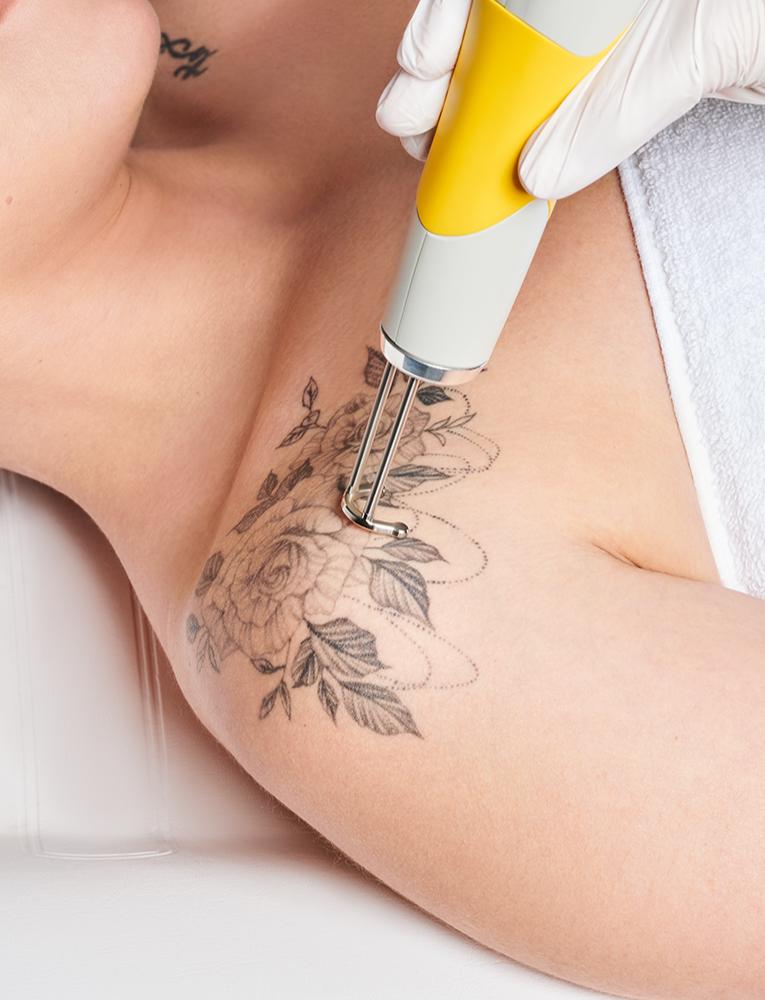
Advanced laser tattoo removal using the Discovery PICO Series at Sanger Avenue Medical Aesthetics in Waco, Texas
At Sanger Avenue Medical Aesthetics, we use the Discovery PICO Series by Quanta Systems (one of the most advanced tattoo removal laser systems available) to safely and effectively fade unwanted tattoos of all colors, sizes and ages.
The Discovery PICO combines industry-leading peak power with picosecond pulse technology and three true laser wavelengths to shatter tattoo ink into particles small enough for the body to naturally eliminate. This means more complete clearance, fewer sessions, and less discomfort than older Q-switched laser technologies.
Whether you're looking to completely remove a tattoo or fade it for a cover-up, we'll build a personalized treatment plan to get you where you want to be.

Frequently Asked Questions
The Discovery PICO laser system delivers ultra-short nanosecond and picosecond laser pulses that shatter tattoo ink particles into fragments so small the body's immune system can naturally clear them away over time.
Our approach at Sanger Avenue Medical Aesthetics involves a couple starting sessions with the nanosecond ("q-switched") pulse duration before switching over to the faster and more powerful picosecond pulse duration. If you imagine ink particles like boulders in the skin, those first 2-3 q-switched sessions break those "boulders" down into "rocks". The picosecond sessions that follow afterwards break those "rocks" down into "sand". We've found that going directly from "boulders" to "sand" with picosecond treatment from the get-go can increase patients' likelihood of pigmentation and textural changes, so we take a more incremental approach in order to better protect the integrity of the skin.
The Discovery PICO system's three true laser wavelengths allow us to target a wide range of ink colors more effectively than single-wavelength devices. Black and dark inks respond most readily. Blues, greens, and reds can be addressed with the appropriate wavelength. Some ink colors - particularly light pastels, whites, yellows, and pinks - can be more resistant to laser removal and may require other interventions with us. Your provider will assess your tattoo at your consultation and give you a realistic expectation of clearance.
This is our most common question, hands down. There is a common misconception that laser tattoo removal is "one and done." This is mostly brought on by videos on social media showing a laser tattoo removal treatment where the tattoo "frosts" up and looks like it's being removed immediately. This frosting is just water molecules in the skin being vaporized and sitting on top of the treated ink and it resolves in about 20 minutes leaving the tattoo looking exactly like it did before (although with some new erythema post-treatment). It's also the most difficult to answer. The amount of sessions needed varies significantly depending on factors such as:
- size of the tattoo
- age of the tattoo
- ink colors used
- density of the ink used
- location of the tattoo
- your skin type and ethnic background
- scarring in the area or textural issues
- skill of the tattoo artist
- how your body responds to treatment
Most tattoos require between 6-12+ sessions for significant clearance. These are spaced 6-12 weeks apart to allow the body time to eliminate the shattered ink between sessions. Your provider will give you a personalized estimate at your consultation.
Most patients describe the sensation as anywhere between rubber band snapping to hot bacon grease. At Sanger Avenue Medical Aesthetics, we try to keep it more towards the rubber band end of that spectrum. The Discovery PICO system is designed for comfortable delivery, and we offer topical numbing cream, cryo cooling with the Sub-Z from Zimmer, ice packs, stress balls, etc. in order to try to make the treatment as tolerable as possible. Treatment time is relatively brief depending on the size of the tattoo.
You can expect some redness, swelling, and occasionally minor blistering in the hours following treatment. This is a normal response. Most patients return to normal activities within a day or two. It's important to keep the treated area clean, moisturized, and protected from sun exposure during the full course of treatment. Full aftercare instructions will be provided at your consultation.
Complete removal is the goal and is achievable for many tattoos, particularly those with black or dark ink. Some tattoos may not clear completely due to:
- ink type
- ink depth
- ink color
Your provider will give you an honest assessment of expected clearance at your consultation, and will update you throughout the treatment process on how the ink is responding. For patients planning on getting a cover-up tattoo in the treatment area, significant fading rather than complete removal is often sufficient and requires fewer sessions.
We typically space sessions 6-12 weeks apart. We recommend around 8 weeks between the first 2-3 sessions (using the nanosecond/q-switched pulse duration) as we are not expecting a lot of visible fading and are more just trying to break down the ink particles incrementally. With the picosecond sessions, we recommend closer to 10-12 weeks apart. This will vary based on skin response and location of the tattoo (as tattoos further out from the "trunk" of the body take longer to fade due to lessened blood flow).
There are many variables at play in tattoo removal. Here are the ones we've found make the biggest difference in number of sessions needed and achievable ink clearance:
- History of smoking, vaping, tobacco usage within the past 5 or so years. Or regular usage for a prolonged period of time more than 5 years ago. This can increase the amount of sessions by 70% (6-12 sessions becomes 10-20).
- Cover-up tattoos: often have higher ink density due to layering, sometimes with different types of ink stacked on top of each other. This can make complete removal more challenging.
- Inks used: greens, teals, yellows, oranges, and whites can be stubborn. Pinks and whites can sometimes paradoxically darken with treatment (which can extend the sessions required as it becomes a bit more difficult to clear from the system). Cheaper inks can behave unpredictably.
- Professional vs. amateur tattoos: professional tattoos tend to sit deeper in the skin and are made for longevity. Because of this, they can take longer to fade.
- Not following aftercare. Sun exposure, lack of hydration (water intake) and activity, and not keeping the area hydrated can all extend the amount of sessions needed as the ink won't clear as effectively.
Yes! We have a few options that play well with laser tattoo removal as well as techniques and protocols within tattoo removal sessions that can enhance results.
Same day protocols available:
Enhanced numbing with Ultra+: For pain management, we can use the Ultra+ ultrasound device to drive the topical numbing more deeply prior to treatment.
R20: The R20 method (or the method of repeated exposures) involves treating the tattoo, letting the initial "frosting" subside (which takes about 20 minutes) and then doing 4-5 rounds of treatment same day. This results in higher ink clearance per session. If numbing is involved also, this can take multiple hours so please let us know when booking your next session if you'd like to do the R20 method so that we can make sure there is room on the schedule to do so. There is also an increased cost associated with this method.
R0: The R0 method uses the same scientific reasoning as the R20 method but with the added usage of the DESCRIBE PFD (perfluorodecalin) patch. This immediately resolves frosting and allows for multiple passes to be done in much less time. There is an increased cost associated with this method.
Resurfacing options: Both NouvaDERM and CO₂ Resurfacing can be used immediately prior to laser tattoo removal to help penetrate more deeply and lessen the amount of sessions needed. The CO₂ resurfacing is very intensive and will only be done in very specific cases.
Outside of the same day protocols, treatments that pair well with it include lymphatic drainage (which helps with clearance through the lymphatic and immune systems), gentle chemical peels (after full healing of the skin between sessions), SkinPen microneedling (if there are textural issues, typically 6+ weeks after laser, and at least 4-6 weeks prior to the next session), and LED light therapy (can be done a couple days after to help facilitate healing).
At Sanger Avenue Medical Aesthetics, we are deeply devoted to making your tattoo removal process as seamless as possible. Please give us a call or book with us online to get your journey started!
Before & After
View All Services