

VISIA® Digital Skin Analysis
VISIA® Digital Skin Analysis at Sanger Avenue Medical Aesthetics in Waco, Texas
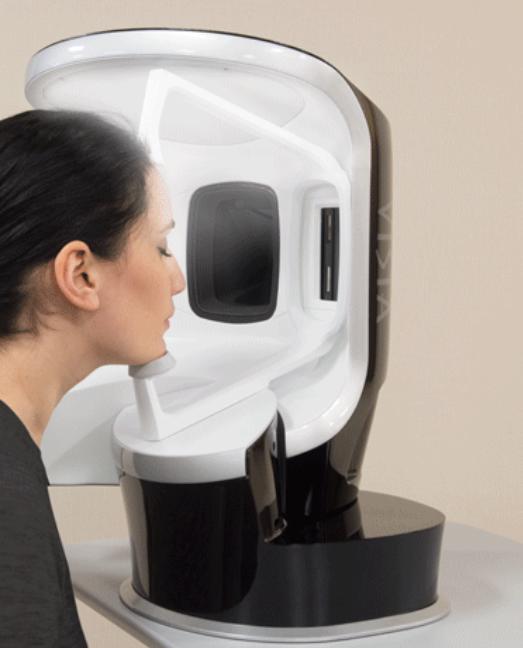
At Sanger Avenue Medical Aesthetics, every great treatment plan starts with genuinely understanding your skin. We take your concerns that are visible on the surface, and look deeper into what's happening beneath it.
The VISIA® Digital Skin Analysis system from Canfield Scientific uses cutting-edge multi-spectral imaging technology to capture a comprehensive evaluation of your skin's health across eight key categories, including concerns that are completely invisible to the naked eye. UV damage lurking beneath the surface, bacterial activity, pore distribution, textural irregularities, underlying redness, and more are all mapped and measured with clinical precision.
The result is a detailed, objective picture of your skin's current state. This is a powerful foundation for building treatment plans personalized and targeted to what your skin actually needs rather than only what it appears to need.
We recommend VISIA® analysis for all new patients as a starting point for their skin health journey, and as a periodic check-in to objectively track how your skin is responding to treatment over time.
Spots: Brown spots, hyperpigmentation, and sun damage visible at the skin's surface (including early pigmentation that isn't yet fully visible to the eye).
Wrinkles Fine lines and wrinkles mapped across the face with objective measurement of depth and distribution, providing a baseline for tracking improvement with anti-aging treatments.
Texture Surface irregularities in skin texture (including roughness, fine lines, and early scarring) mapped and measured for objective comparison before and after treatment.
Pores Pore distribution, size, and visibility across the face, helping identify areas of congestion and informing treatment recommendations for pore refinement.
UV Spots Subsurface UV damage not yet visible at the skin surface. This is one of VISIA's most valuable capabilities, revealing sun damage years before it becomes visible and informing protective treatment planning.
Brown Spots Melanin-based pigmentation measured both at the surface and subsurface, distinguishing between existing visible spots and underlying pigmentation developing beneath the skin.
Red Areas Vascular irregularities and redness. This helps identify areas of active inflammation, broken capillaries, and rosacea-related vascular activity that inform treatment recommendations for redness and vascular concerns.
Porphyrins Bacterial activity on the skin surface. Porphyrins are produced by the P. acnes bacteria responsible for acne. VISIA maps their distribution, providing objective evidence of bacterial load for patients with acne-prone skin.
VISIA is a clinical-grade multi-spectral imaging system from Canfield Scientific that captures a comprehensive evaluation of skin health across eight categories:
- spots
- wrinkles
- textures
- pores
- UV spots
- brown spots
- red areas
- porphyrins
It uses three distinct lighting modes:
- standard white light
- cross-polarized light
- UV fluorescent light
to reveal both surface and subsurface skin features, including concerns that are completely invisible to the naked eye. The result is a detailed and objective map of your skin's current state that informs personalized treatment recommendations.
VISIA gives both you and your provider a clear, objective picture of what your skin actually needs, including subsurface UV damage and bacterial activity that aren't visible in a standard skin assessment. Starting with VISIA means your treatment plan is based on real data rather than assumptions and your provider can prioritize the concerns that matter most for your long-term skin health. It also means you have a documented baseline against which to measure the progress of your treatments over time.
A VISIA session is quick and completely comfortable. There's no contact with the skin, no discomfort, and no preparation required. You'll position your face in the VISIA imaging station while a series of images are captured under different lighting conditions. The session itself takes just a few minutes. Your provider then reviews your results with you, walking through each category and discussing what the findings mean for your treatment plan.
Subsurface UV damage refers to melanin-based photodamage that has accumulated in the deeper layers of the skin but hasn't yet reached the surface as visible spots or discoloration. VISIA's UV fluorescent imaging can reveal this damage years before it becomes visible, which is clinically significant because it allows your provider to recommend protective and corrective treatments proactively rather than waiting until the damage is fully visible. Many patients are surprised by the extent of subsurface UV damage revealed by the VISIA, particularly those who spent significant time in the sun earlier in life.
VISIA uses precise positioning guides to capture images at exactly the same angle and in exactly the same lighting conditions at every session, making before and after comparisons more objective than subjective. When you repeat your VISIA analysis after a series of treatments, the side-by-side comparison objectively shows changes in pigmentation, pore appearance, redness, and other categories. For many patients, seeing the objective data of their improvement is both motivating and validating, particularly for subsurface changes that aren't fully visible in the mirror.
We recommend an initial VISIA analysis for all new patients as the starting point for their treatment plan. A follow-up analysis every 6-12 months (or at significant milestones in your treatment journey) provides meaningful progress tracking. Patients undergoing intensive treatment series for pigmentation, acne, or aging may benefit from more frequent check-ins. Your provider will recommend the right schedule based on your treatment plan.
VISIA is most valuable as the starting point for any new patient or as a periodic check-in to track progress. It informs and enhances every other treatment you receive.
The comprehensive imaging data VISIA provides (mapping UV damage, pigmentation, texture, pores, redness, and bacteria) allows your provider to build a more precise and targeted treatment plan across every category of service we offer.
VISIA pairs particularly well before beginning a series of treatments for pigmentation such as laser pigment reduction, IPL, or VI Peel, where documenting baseline UV damage and tracking clearance over time demonstrates concrete progress. It's also valuable before CO₂ resurfacing, Morpheus8, or a SkinPen series for the same reason.
Ready to truly understand your skin? Book your VISIA Digital Skin Analysis at Sanger Avenue Medical Aesthetics in Waco, and let's build your personalized skin health plan from the ground up.