

Rosacea or Fungal Acne? Identifying and Treating Outer Conditions through Inner Balance
Rosacea or Fungal Acne?
Identifying and Treating Outer Conditions through Inner Balance
I often get questions from clients about Rosacea (including Rosacea Acne) and Fungal Acne. These are common skin concerns for which they are seeking guidance on potential factors, treatments, and product recommendations that can help restore balance. Inflammatory skin conditions such as rosacea and fungal acne are very common, often misunderstood, and can be mistaken for other conditions. While these conditions can appear similar on the surface, they arise from very different internal and external patterns. In this article we will discuss what the conditions are, the symptoms and causes from a holistic perspective, and product recommendations for each of these concerns!
From a holistic esthetic perspective, the skin is not an isolated organ—it reflects the state of the digestive, nervous, and immune systems, and thus overall internal balance. In order to really support the skin, it is often ideal to approach healing the skin’s integrity using a combination of in-house treatments and at-home care. Let’s dive in.
What is Rosacea?
A Pattern of Heat, Sensitivity, and Reactivity Rosacea from an Esthetic Perspective
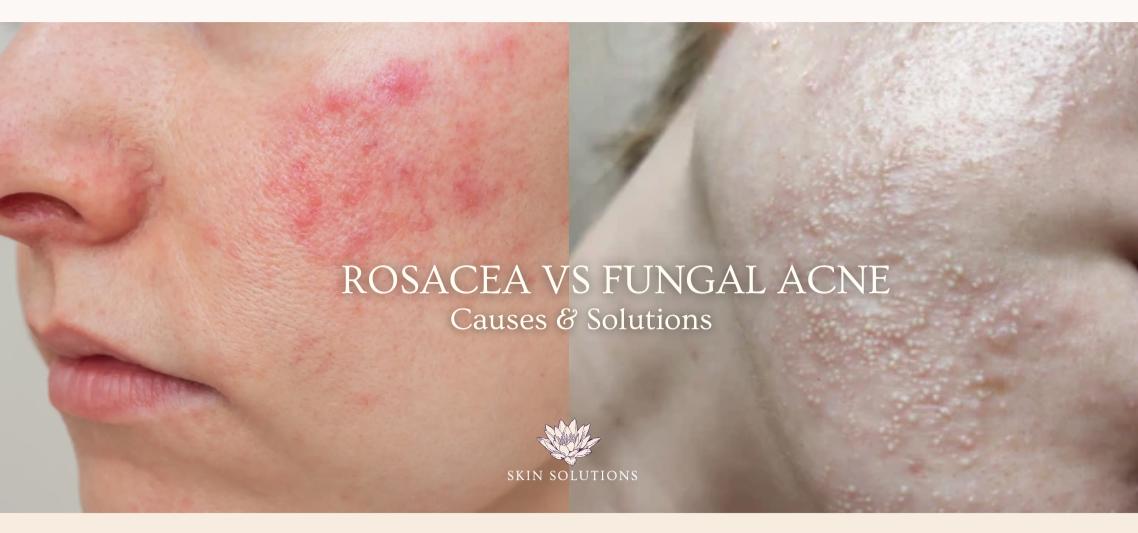
Rosacea is a chronic inflammatory skin condition most commonly affecting the midface; encompassing the nose, cheeks, and chin, and sometimes (although less commonly) the forehead. It is often characterized by persistent redness, flushing, visible capillaries, sensitivity, and sensations of burning or stinging. In many cases, the skin barrier is compromised, leaving the skin more reactive to products, temperature changes, and environmental stressors.
Rosacea-prone skin tends to respond quickly and intensely to stimuli, yet recover slowly once triggered. For this reason, aggressive treatments and overuse of active ingredients often exacerbate symptoms rather than relieve them.
At its core, rosacea is a condition of heightened sensitivity and inflammation—both externally and internally.
Rosacea Through Traditional Wisdom
Long before modern dermatology, traditional medical systems observed patterns of facial redness and reactivity as reflections of internal imbalance.
In Traditional Chinese Medicine (TCM), facial flushing and redness are often associated with excess internal heat rising upward. Classical texts describe how heat, when not properly regulated or dispersed, seeks expression through the upper body and the skin.
This internal heat may be intensified by factors such as:
- Alcohol
- Spicy or heavily stimulating foods
- Excess caffeine
- Chronic emotional stress
- Overexertion or insufficient rest
From a Western humoral perspective, rosacea resembles an excess of choleric heat—a state historically associated with warmth, intensity, and over-activation within the system. These symptoms can be further revealed through exposure to the elements; sun, wind, and extreme heat or cold.
Supporting Rosacea from Within
Supporting rosacea-prone skin begins with calming rather than correcting. Internally, this may include practices that help reduce excess heat and support nervous system regulation, such as prioritizing rest, alleviating stress, and limiting known triggers (like those listed above!).
Externally, skincare should focus on:
- Barrier repair and protection
- Anti-inflammatory support
- Gentle, cooling formulations
- Avoiding overstimulation and over-exfoliation
Products
Here are the Products I recommend for Rosacea, which are most effective when chosen to soothe and strengthen:
- Prequel Skin Universal Skin Solution Hypochlorous Acid Spray with Minerals & Electrolyzed Water - pH-Stabilized Care
- La Roche-Posay Toleriane Dermallergo Ultra Soothing Repair Face Moisturizer for Sensitive Skin
- Anua Azelaic Acid 10 Hyaluron Redness Soothing Serum
- Bioderma Sensibio Micellar Cleansing Oil (gentle makeup removal)
- Bioderma Sensibio Foaming Gel Wash (Gently cleanses and removes make-up)
What is Fungal Acne?
When the Environment Favors Overgrowth: The Roots of Fungal Acne
Fungal acne, also known as Malassezia folliculitis, is often mistaken for traditional acne or rosacea. Despite its name, it is not true acne. Instead, it involves an overgrowth of Malassezia yeast—an organism that naturally exists on the skin.
When the skin’s environment becomes warm, occluded, or imbalanced, this yeast can proliferate, leading to clusters of small, uniform bumps that are often itchy or irritated and resistant to conventional acne treatments. Fungal acne can appear on the chin, forehead, chest, side of the nose, shoulders, upper back, and arms. It may be itchy and feel more prominent or "active" in warm-damp, environments.
The Scalp–Face Connection
One important and frequently overlooked aspect of fungal acne is its relationship to the scalp.
Fungal overgrowth often begins on the scalp and may migrate downward to the forehead, temples, hairline, and jawline. This pattern is commonly influenced by:
- Occlusive hair products
- Sweat and heat
- Damp or humid conditions
For this reason, antifungal shampoos are sometimes recommended as part of a comprehensive approach. Addressing the scalp environment can significantly reduce recurring facial flare-ups by lowering the yeast load at the source.
Internal Imbalance and Yeast Overgrowth
From a holistic perspective, fungal acne is rarely only a surface issue. External overgrowth often reflects an internal environment that favors imbalance.
In Traditional Chinese Medicine, this pattern is frequently associated with damp-heat accumulation—a state in which digestion and fluid transformation are compromised, leading to congestion and inflammation that seek release through the skin.
From Western holistic models, fungal overgrowth may correlate with:
- Digestive or microbiome imbalance (this is a big one, as the skin's surface reflects the digestive system's health)
- Blood sugar instability
- Chronic low-grade inflammation
- A weakened immune response
- Hot or Damp skin (think hot yoga, sweaty exercise, warm-humid climates)
These conditions often appear in other ways in the body and they each have unique procedures to address the root cause of the imbalance at hand.
Supporting Fungal Acne from Within
Supporting fungal acne involves creating an internal and external environment that does not favor overgrowth.
Internally, this may include:
- Supporting digestion and elimination (cruciferous vegetables, movement and exercise)
- Reducing excess internal moisture and heat (excess spicy foods, dairy products, hydrogenated oils, greasy and fried foods, and surprisingly, sugar)
- Stabilizing blood sugar (Including quality proteins and fats within each meal)
- Supporting immune and microbiome balance (Whole foods (prebiotics) and fermented foods and/or a probiotic supplement) (Highly reccomended)
- Showering after exercising or sweating
Each of these will address the issue from the necessary angles to restore harmony to the system. When harmony is restored, the skin’s outer layer will reflect this balance! That said, there are absolutely products that I will recommend to get you started, but I always encourage clients to take the time to really lean into the deeper causes of these so they can experience healthy skin for the long run, free of flare ups and (once) “unexpected” break outs!
Externally, skincare should focus on:
- Avoiding ingredients known to feed yeast (sugars and sweeteners, alcohol, processed foods)
- Reducing occlusion (with makeup and heavy creams/topicals)
- Supporting the skin’s natural microbiome
Products
Here are the Products I recommend for Rosacea, which are most effective when chosen to soothe and strengthen:
- Nizoral Anti-Dandruff Shampoo with 1% Ketoconazole (this is good option especially if the acne appears on the upper back, a sign the origin may be the scalp)
- Prequel Skin Universal Skin Solution Hypochlorous Acid Spray (HA has natural Anti-fungal properties)
- Garden of Life Dr. Formulated Women’s Daily Care Probiotics (Highly recommended if you experience any digestive system disruptions in conjunction with fungal acne)
The Role of Professional Guidance
While educational resources are empowering, I know how confusing and challenging it can be to attempt to self diagnose and treat the imbalances which may be causing a skin concern, the concern itself is often a mystery! In addition to this, Inflammatory skin conditions are highly individual because the clients constitution, lifestyle, and skin history is completely unique to them. What is soothing and restorative for one client may trigger further imbalance in another. I also know how discouraging it can be to have symptoms for which you don't know the cause and just want to feel confident in your skin again.
A trained esthetician can help identify patterns, triggers, and appropriate product selections based on a comprehensive understanding of the skin’s history and behavior. This kind of professional guidance can bridge the gap between problem and solution, ensuing that you get the best results (that actually last) and don't waste your time, energy, and resources on things that don't seem to resolve the problem.
Cultivating Skin Health from the Inside Out
Both rosacea and fungal acne are manageable when approached with understanding. Your skin is worth understanding, and it is part of a complex organism that requires patience, guidance, and support. That organism is You!
If you would like a consultation for skin treatment that is personalized for conditions like Rosacea or Fungal Acne, feel free to contact the studio and we can get you set up for an appointment.
Contact Skin Solutions