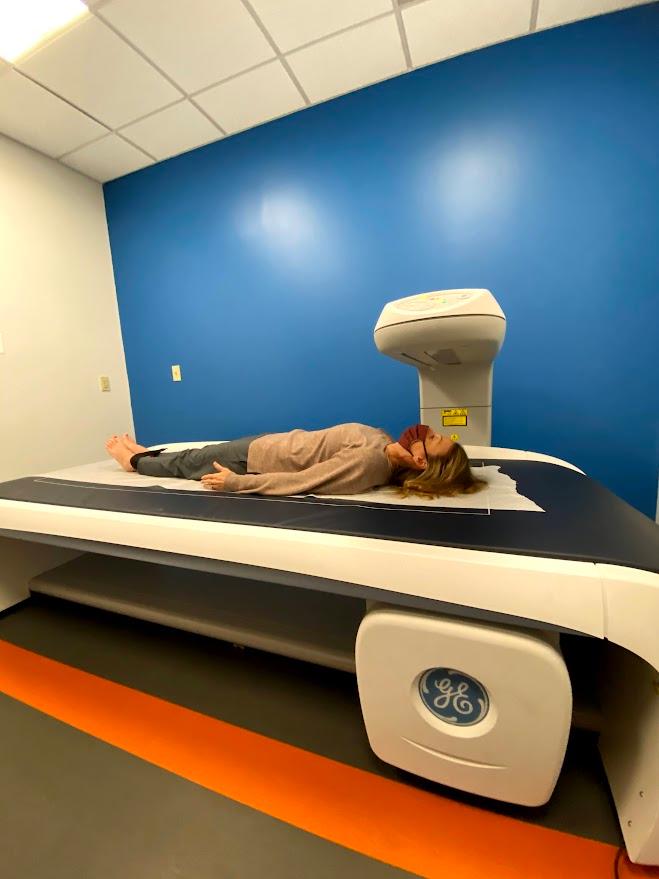
For health-conscious adults, improving health isn’t just about losing weight; it’s about losing the right tissue, preserving muscle, and reducing long-term risk.
That’s exactly where DEXA body composition testing stands apart.
At NSMI Sports Lab, we use DEXA scans not as a one-time metric, but as a decision-making tool that informs nutrition, training, recovery, and long-term health strategies.
Here’s what a DEXA scan actually tells you, and how to use that information effectively.
What Is a DEXA Scan and What Does It Measure?
A DEXA (Dual-Energy X-ray Absorptiometry) scan is one of the most accurate ways to assess body composition.
Unlike bathroom scales or bioimpedance devices, a DEXA scan directly measures:
- Total body fat percentage
- Visceral fat (fat surrounding internal organs)
- Lean muscle mass
- Bone mineral density
- Regional distribution of fat and muscle (arms, legs, trunk)
This allows us to see what your body is made of, not just what it weighs.
Why Body Composition Matters More Than Scale Weight
Scale weight alone cannot tell you:
- Whether fat loss is coming from fat or muscle
- If your nutrition approach is too aggressive
- Whether training adaptations are occurring
- If cardiometabolic risk is improving
Two people can weigh the same and have vastly different health profiles.
DEXA provides clarity where the scale cannot.
What Does a DEXA Scan Tell You About Your Health?
Body Fat vs. Visceral Fat
Visceral fat is strongly linked to:
- Insulin resistance
- Cardiovascular disease
- Metabolic dysfunction
DEXA directly measures visceral fat, allowing us to assess cardiometabolic risk and track meaningful improvements over time.
Lean Muscle Mass and Aging
As we age, preserving lean muscle becomes critical for:
- Metabolic health
- Injury prevention
- Functional independence
DEXA helps identify whether muscle mass is being maintained, gained, or unintentionally lost, especially during fat loss phases.
Regional Imbalances
DEXA provides regional data that can highlight:
- Side-to-side muscle imbalances
- Disproportionate lean mass distribution
- Areas that may benefit from targeted training or recovery
Bone Health: Why DEXA Hip and Spine Scans Matter
DEXA testing is widely known for body composition, but it is also the gold standard for measuring bone mineral density (BMD) a critical factor in long-term health, injury prevention, and aging well.
Why Bone Health Matters
Bone loss often occurs silently. Many individuals don’t realize bone density is declining until a fracture or injury occurs.
Low bone density is associated with:
- Increased fracture risk
- Reduced mobility with aging
- Longer recovery times from injury
- Loss of independence later in life
DEXA allows bone health to be assessed before problems arise, making it a powerful preventative tool.
Why the Hip and Spine Are the Most Important Sites
When assessing bone density, the hip and lumbar spine are considered the most clinically relevant measurement sites.
DEXA hip and spine scans are ideal because:
- They are strong predictors of fracture risk
- These areas are highly responsive to aging, nutrition, and training
- Changes here are meaningful for long-term health planning
- They are the primary sites used in clinical osteoporosis screening guidelines
Measurements from the hip and spine provide a more accurate picture of overall skeletal health than peripheral sites like the wrist or heel.
How We Use Bone Density Data in Practice
At NSMI Sports Lab, bone density data helps guide:
- Nutrition strategies to support bone health
- Training decisions that promote skeletal loading safely
- Conversations around injury risk and longevity
- Long-term trend tracking rather than one-time diagnosis
For active individuals, bone density trends can also help ensure that training volume and nutrition are supporting, not compromising, skeletal health.
When Should You Get a DEXA Bone Density Scan?
While recommendations vary, a practical, preventative approach looks like this:
- Ages 30–40: Establish a baseline, especially for active individuals or those with risk factors
- Ages 40–50: Strongly recommended to track early changes
- 50+ years: Regular monitoring becomes increasingly important, particularly for women and individuals with a family history of osteoporosis
Risk factors that may warrant earlier testing include:
- History of fractures
- Chronic dieting or low energy intake
- Hormonal changes
- High training volume without adequate recovery
- Family history of low bone density
Baseline testing allows future scans to be compared against your own data, rather than population averages alone.
Bone Health Fits Naturally Into Long-Term Monitoring
Just like body composition, bone density is best evaluated over time.
DEXA allows us to:
- Monitor subtle changes in bone mass
- Assess whether lifestyle and training choices are protective
- Support long-term musculoskeletal health alongside performance goals
This makes bone density assessment a valuable component of a comprehensive baseline evaluation.
How to Use DEXA Scan Results for Nutrition and Training
At NSMI Sports Lab, we actively use DEXA data to guide decisions such as:
- Setting appropriate calorie targets
- Choosing fat loss vs. body recomposition strategies
- Preventing muscle loss during dieting
- Adjusting training intensity and recovery
- Validating whether a plan is actually working
Rather than reacting to short-term fluctuations, we focus on trend-based decision-making.
How Often Should You Get a DEXA Scan?
A single DEXA scan provides insight.
Multiple scans over time provide strategy.
For most health-conscious adults:
- Baseline testing establishes a starting point
- Follow-up scans every 3-6 months allow for trend tracking
- Annual comparisons reveal long-term progress
This cadence fits naturally into a structured coaching or performance membership, where data informs action.
DEXA vs. InBody and Other Body Composition Scans
While bioimpedance devices are convenient, they are:
- Highly sensitive to hydration
- Less accurate for regional lean mass
- Poor at tracking small but meaningful changes
DEXA offers greater precision and consistency, making it far more useful for ongoing health and performance planning.
How DEXA Fits Into Our Membership Model
DEXA testing is the foundation of our approach:
- We start with baseline testing
- Coaching and recovery strategies are applied using your data
- Follow-up DEXA scans guide adjustments
- Progress is evaluated objectively over time
This ensures decisions are based on evidence, not assumptions.
If you’re looking for a DEXA scan near you, NSMI Sports Lab provides Loudoun County with professional body composition testing with coaching support to help you apply the results, not just read them.